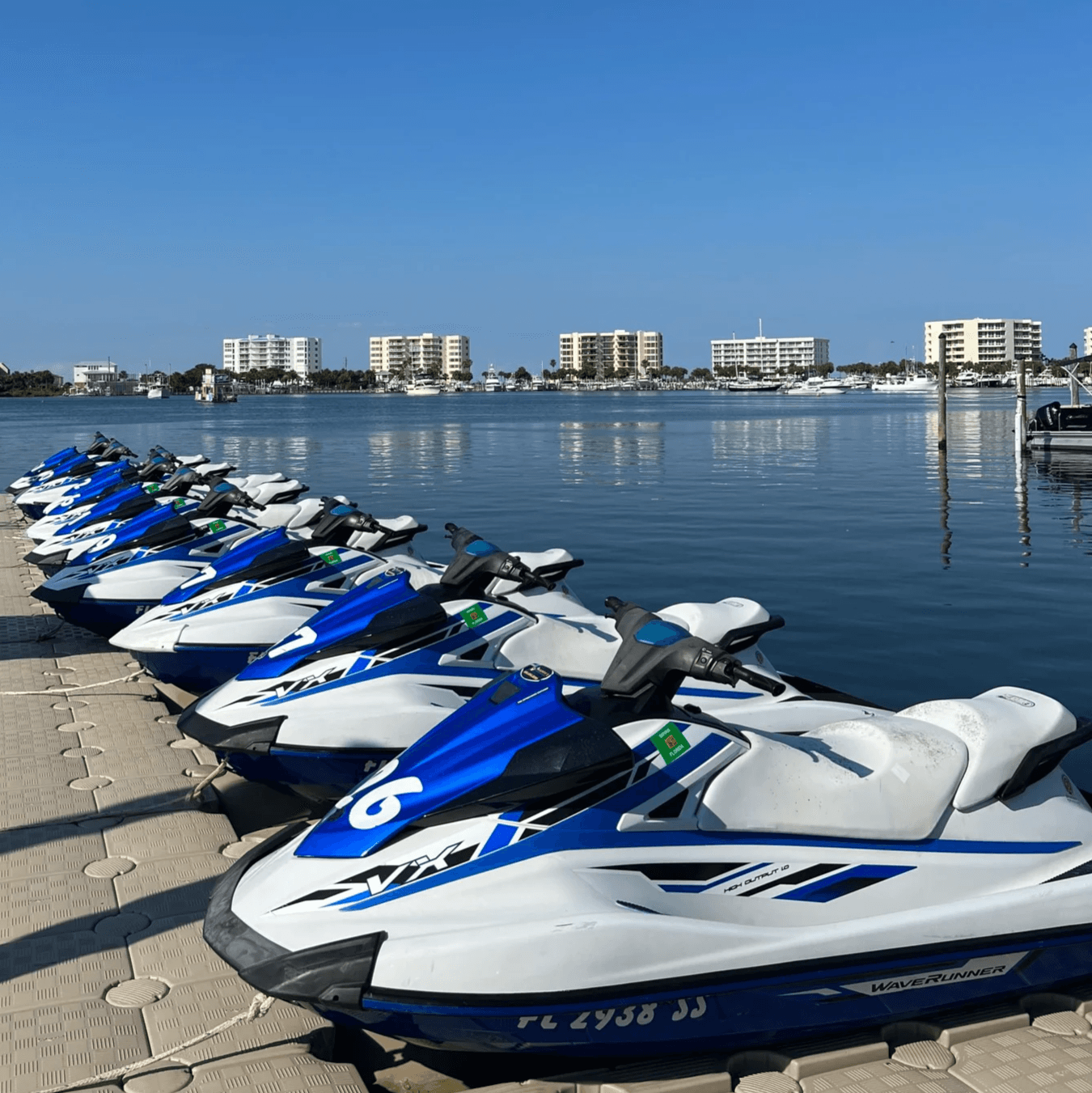
This guide walks through the key steps to consider when building a jet ski rental business plan, from choosing your market to preparing your fleet for its first customers.
1. Research Your Local Jet Ski Rental Market
The first step in starting a jet ski rental business is understanding where and how you plan to operate.
Look at the waterways in your area and the customers who use them. A tourist destination may have strong seasonal demand, while a location with year-round warm weather could have a different operating pattern.
You should also research the competition.
Look at other jet ski and watersports businesses in your market and consider questions such as:
What types of rentals do they offer?
How long are their rental periods?
Do they offer guided or self-guided experiences?
What other watersports activities are available nearby?
When is the busiest season?
This research can help you identify where your business fits before you invest heavily in equipment.
Choose your rental model
Your business model will affect nearly every other decision you make.
For example, you might offer:
Hourly jet ski rentals
Half-day or full-day rentals
Fixed-time rental packages
Guided jet ski tours
Add-ons such as life jackets or other equipment
Think carefully about how customers will use your machines. Short, back-to-back rentals require fast turnaround processes, while longer rentals may require different pricing and scheduling rules.
The right jet ski rental software can support hourly rates, fixed-time packages, availability, and turnaround buffers between bookings.
2. Build a Jet Ski Rental Business Plan
A business plan gives you a way to think through your operation before spending money.
You do not need to predict every detail perfectly. The goal is to identify your biggest costs, understand how your business will operate, and create a plan you can adjust as you learn.
Your plan should consider:
Your target customers
Your launch location
Your fleet size
Your rental packages and pricing
Startup and operating costs
Marketing plans
Safety and documentation procedures
Start with the equipment you can manage
Your fleet will likely be one of your largest startup investments.
Before deciding how many machines to buy, think about your expected demand, the amount of storage and launch capacity you have, and how much working capital you need after purchasing the fleet.
Starting with a manageable number of machines can make it easier to learn your market and refine your operations.
Every jet ski should also be treated as an individual business asset. You need to know which machine is booked, its current condition, its engine hours, and whether it is available or out for service.
Renta's guide to jet ski rental software and fleet management explains why a booking calendar alone may not be enough for a PWC rental operation. Each machine has its own condition, maintenance history, and availability.
3. Calculate Your Jet Ski Rental Business Costs
There is no single answer to how much it costs to start a jet ski rental business.
Your startup costs will depend on your location, the size and condition of your fleet, your insurance requirements, your storage arrangements, and the way you plan to operate.
Your budget should account for more than the cost of purchasing jet skis.
Common expenses may include:
Jet skis and fleet equipment
Trailers or transportation
Launch and storage arrangements
Insurance
Permits and business licensing
Safety equipment
Maintenance and repairs
Marketing and website costs
Booking and operational software
Working capital for unexpected expenses
Don't forget ongoing operating costs
Buying the fleet is only the beginning.
Jet skis require regular maintenance, and your operation needs a process for tracking service over time. Engine hours are particularly important because maintenance schedules may depend on usage.
You should also budget for routine inspections, repairs, fuel, cleaning, storage, and the cost of replacing or repairing damaged equipment.
Before buying equipment, build a realistic operating budget that covers both your startup period and your first season.
For a broader look at planning startup expenses, Renta's guide to starting an equipment rental business and estimating startup costs offers a useful framework for thinking through fleet investments and operating costs.
4. Secure Your Location and Understand Local Requirements
A great fleet does not help much if you do not have a practical place to operate.
Your location affects your customer experience, launch procedures, storage, and day-to-day logistics.
Before committing to a location, research the local rules that apply to commercial rentals. Requirements can vary by state, city, waterway, and launch location.
Depending on where you operate, you may need to address business licensing, commercial use permissions, safety requirements, or other local rules.
Because requirements vary, contact the appropriate local authorities and work with qualified professionals to understand what applies to your business.
Plan for the full customer journey
Think beyond where customers ride.
Where will they park? Where will they check in? Where will they sign required documents? How will staff inspect machines before and after each rental?
A clear customer flow can help you avoid bottlenecks during busy periods.
Renta's guide to how rental businesses get online and start taking bookings outlines a connected workflow where customers book, complete required documents, and move through the rental process without relying on disconnected tools.
5. Get the Right Insurance and Documentation in Place
Jet ski rentals involve real operational and financial risks.
Before opening your business, work with a qualified insurance professional who understands your type of rental operation. Review the coverage available to your business, including policy limits, deductibles, and exclusions.
Insurance should be part of a broader risk-management process.
Your operation may also need rental agreements, liability waivers, customer rules, and other documents appropriate for your business.
The specific documents and requirements depend on your operation and the laws that apply to it.
Renta's guide to writing a rental waiver that protects your business explains why the wording of a waiver and the process used to collect signatures both matter.
Have your legal documents reviewed by a qualified attorney before using them with customers.
6. Create a Safe and Repeatable Rental Process
Busy rental days can become chaotic without a consistent process.
Your team should know what happens at every stage of the rental, from the moment a customer books until the jet ski is returned and ready for the next renter.
A basic workflow might include:
The customer books a rental and pays according to your policies.
Required riders complete the appropriate documents.
Staff confirm the rental details and customer information.
The jet ski is inspected before launch.
Staff record relevant machine information, such as engine hours.
The customer returns the machine.
Staff inspect the jet ski again and document any issues.
The machine is prepared for its next rental or removed from service.
A repeatable process makes training easier and helps your team stay organized during busy periods.
Want to see how bookings, waivers, deposits, inspections, and fleet records can work together? Book a Renta demo and explore a workflow built for rental operators.
7. Track Your Jet Ski Fleet and Maintenance
A jet ski rental business does not simply manage reservations. It manages individual machines.
Each PWC can have its own engine hours, service history, condition, and availability.
If one machine needs repair, your booking system should reflect that it is unavailable rather than allowing another customer to reserve it.
Renta's jet ski rental software for PWC rental shops is designed around the full rental lifecycle, including unit availability, engine-hour tracking, maintenance schedules, digital waivers, deposits, and condition checks.
Build inspections into every handoff
Condition documentation is particularly important in a rental business.
Before a jet ski leaves, staff can record its condition and take photos. At return, the same process can help identify changes.
A consistent inspection process creates a clearer record of each rental and helps your team handle damage issues according to your established policies.
8. Set Your Pricing and Booking Rules
Your pricing should support the way your business operates.
Consider the rental durations you plan to offer and the time needed between customers for inspections, refueling, and preparing the machine.
You may also need rules for:
Clear rules help your staff manage bookings consistently and help customers understand what to expect before they arrive.
Seasonal demand can also affect how you plan your pricing.
Renta's complete guide to seasonal pricing for rental businesses can help operators think through pricing rules that match busy and slower periods.
9. Build Your Website and Booking Experience
Many customers will search online before choosing a jet ski rental company.
Your website should make it easy for them to understand what you offer, check availability, and complete a reservation.
A mobile-friendly booking experience is especially important for outdoor rental businesses because customers may be planning activities from their phones.
With Renta, operators can use a branded storefront and booking tools designed for rental businesses. The platform supports online reservations, payments, digital waivers, and operational workflows in one workspace.
When planning your online presence, focus on making the customer journey clear:
The easier these questions are to answer, the easier it is for potential customers to move from searching to booking.
10. Prepare for Your First Busy Season
Your first season will teach you things that are difficult to predict in a business plan.
Pay attention to where your operation slows down.
Are customers arriving without completed documents? Are inspections taking too long? Are staff struggling to track which jet ski is assigned to which booking?
Use those lessons to improve your process.
The goal is to create an operation that can handle more bookings without creating more paperwork and confusion.
Renta brings bookings, fleet management, digital waivers, deposits, payments, inspections, and operational records together in one platform built for outdoor rental businesses.
Start Small, Build Strong Systems, and Grow
Starting a jet ski rental business requires planning, investment, and a clear understanding of how your operation will work every day.
Start by researching your market and securing a viable location. Build a realistic budget that includes both your fleet and ongoing operating costs. Review local requirements, insurance, and legal documentation with qualified professionals.
Then focus on the systems behind every rental.
A clear booking process, organized customer records, consistent inspections, and reliable fleet maintenance can help create a stronger foundation as your business grows.
Ready to build your jet ski rental operation with one connected system? Book a demo with Renta or try the platform to see how bookings, fleet tracking, waivers, deposits, and rental operations can work together from day one.