A strong plan helps you answer important questions before you spend money: Who will rent from you? What equipment will you offer? How will customers book? What will it cost to get started? And what systems will help you manage the business as it grows?
This guide walks through the key sections of a simple kayak rental business plan and includes a template you can use to organize your ideas.
Why You Need a Kayak Rental Business Plan
Starting a rental business involves more than purchasing equipment.
Your kayaks are only one part of the operation. You also need to consider where you will operate, how customers will find you, how you will manage reservations, and what it takes to keep your equipment ready to rent.
A business plan helps you look at these pieces together.
It can also help you identify potential problems before your first customer arrives. For example, you may discover that your planned location creates storage challenges or that your pricing does not leave enough time between rentals for staff to inspect and prepare equipment.
Your plan does not need to be permanent. As you learn more about your customers and local market, you can update it.
The Simple Kayak Rental Business Plan Template
A practical kayak rental business plan can be built around a few core sections:
Business overview
Target market
Products and rental services
Location and operations
Startup costs and budget
Pricing and revenue strategy
Marketing and customer acquisition
Risk management and documentation
Technology and booking systems
Goals and growth plan
Let's look at each section.
1. Write Your Kayak Rental Business Overview
Start with a short description of your business.
Explain what you plan to offer and who you plan to serve.
For example, your business overview might answer:
Where will the business operate?
What types of kayaks will you rent?
Will you offer hourly, daily, or multi-day rentals?
Will you offer guided experiences?
Who are your primary customers?
Keep this section simple. You can always add more detail later.
The purpose is to give you—and anyone reviewing your plan—a clear understanding of what your business does.
Define your rental business model
Your rental model affects many other parts of your plan.
A business offering short hourly rentals at a busy waterfront may operate very differently from a company offering multi-day kayak rentals.
Consider which options fit your market:
Your booking process should support the types of rentals you actually offer. Renta's guide to different types of rental bookings can help you think through how different booking options affect your operation.
2. Identify Your Target Market
Your next step is understanding who your customers are likely to be.
Depending on your location, your target market might include tourists, families, local residents, groups, or people looking for guided outdoor experiences.
Research your local market before investing heavily in equipment.
Look at:
Other kayak and watersports rental businesses
Nearby tourist attractions
Hotels and accommodations
Local waterways and launch locations
Seasonal patterns
Other outdoor activities available in the area
The goal is to understand what customers are already looking for and where your business may have an opportunity to offer something different.
Research your competition
You do not need to copy other rental businesses.
Instead, use competitor research to understand the market.
Look at the types of rentals they offer, their booking process, and how they present their services online.
Ask yourself:
What seems to work well?
Are there customer needs that are not being addressed?
Are there rental options you could offer differently?
How easy is it for customers to find information and book?
This research can help shape your business before you commit to a specific fleet or pricing model.
3. Plan Your Kayak Fleet and Services
Your equipment is at the center of your rental business.
Start by deciding what types of kayaks make sense for your customers and operating environment.
Think about how much equipment you can realistically manage.
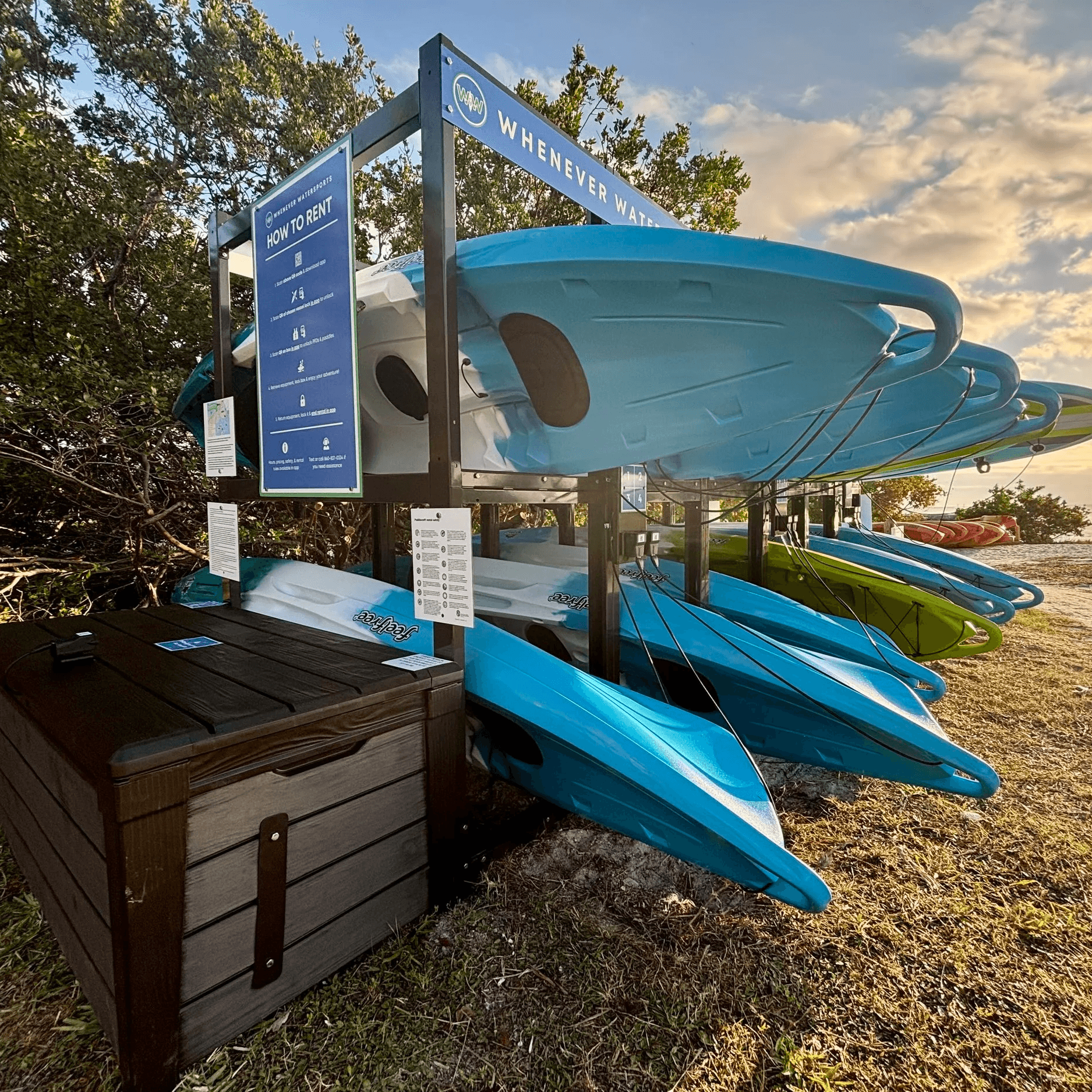
Your fleet may include kayaks and related equipment such as paddles and other items needed for your rental experience.
Keep track of what is included with each rental. Clear equipment records can help your staff prepare for customers and identify missing items when equipment is returned.
As your fleet grows, managing availability becomes more important.
Using kayak rental software can help connect online bookings with equipment availability and the rest of your rental workflow.
4. Estimate Your Kayak Rental Startup Costs
Your startup budget should account for more than buying kayaks.
The cost of starting a kayak rental business depends on your location, fleet size, business model, and operating requirements.
Your budget may need to include:
Kayaks and rental equipment
Paddles and related accessories
Storage and transportation
Launch or location arrangements
Insurance
Business licenses and permits
Marketing and website costs
Booking and rental management software
Cleaning, maintenance, and repairs
Working capital for unexpected expenses
There is no single startup cost that applies to every kayak rental business.
The best approach is to list your expected expenses and separate one-time startup costs from ongoing operating costs.
Renta's guide to starting an equipment rental business and estimating startup costs provides a useful framework for thinking through the broader costs of launching a rental operation.
Plan for costs after opening day
Your budget should also account for what happens after you begin accepting customers.
Equipment needs cleaning, maintenance, and occasional repairs. You may also have recurring expenses for insurance, software, marketing, and your location.
A business plan that focuses only on the initial investment can leave out the costs required to keep the operation running.
5. Create Your Kayak Rental Pricing Strategy
Your pricing should reflect how your business operates.
Start by deciding which rental durations you want to offer.
For example, you might offer hourly rentals alongside longer half-day or full-day options.
When setting prices, think about more than what competitors charge.
Consider the time your staff needs to prepare equipment, check customers in, and inspect equipment when it is returned.
You should also establish clear policies for cancellations, late returns, and weather-related changes.
Renta's guide to seasonal pricing for rental businesses can help you think about how your pricing approach may need to change between busy and slower periods.
The goal is to create a pricing structure that works for your customers while supporting your day-to-day operations.
6. Plan Your Daily Rental Operations
A good business plan should explain how a typical rental will work.
Map out the customer journey from the first booking through the return of the equipment.
Your process might look like this:
A customer finds your business and makes a reservation.
The customer completes required information and documents.
Staff prepare the equipment for pickup.
The customer checks in and receives the rental.
The equipment is returned.
Staff inspect and prepare the equipment for the next rental.
Writing down this process can help you identify where your operation needs clear procedures.
For example, how will your staff know which kayak is assigned to which customer? How will you record the condition of the equipment? Where will you store customer documents?
A connected rental management platform for outdoor businesses can help bring bookings, customer information, payments, and operational records into one workflow.
Want to see how a connected rental system can support your business plan? Book a Renta demo and explore how online bookings, digital waivers, payments, and operations can work together.
7. Include Risk Management and Customer Documentation
Your business plan should also address how you plan to manage risk.
The exact requirements for your business will depend on your location and the activities you offer.
You may need insurance, rental agreements, liability waivers, customer policies, and other documentation.
Renta's guide to writing a rental waiver that protects your business explains why the content of a waiver and the process used to collect signatures both matter.
Have your legal documents reviewed by a qualified attorney before using them with customers.
Your team should also have a consistent process for collecting required documents and keeping them connected to the appropriate rental.
8. Build Your Marketing and Online Booking Strategy
Customers need to be able to find your business before they can rent from you.
Your marketing plan should consider how potential customers search for kayak rentals in your area.
Your website should clearly explain:
An easy online booking experience can make a major difference in how customers interact with your business.
With online kayak rental booking software, operators can connect their online booking experience with the operational side of the rental.
Think about the entire customer journey. The information a customer sees before booking should match the process they experience when they arrive.
9. Set Goals for Your First Season
Your business plan should include goals you can use to evaluate your progress.
Your first season is an opportunity to learn what works.
Pay attention to your busiest rental periods, the types of bookings customers choose, and where your team experiences delays.
You can use those lessons to adjust your fleet, pricing, staffing, and processes.
Avoid assuming that your original plan cannot change.
The best business plans give you direction while leaving room to adapt.
A Simple Kayak Rental Business Plan Template
Use the following template as a starting point for organizing your business plan.
Business Overview
Business name: ______________________________
Location: ______________________________
What we offer: ______________________________
Target customers: ______________________________
Market Research
Primary customer groups: ______________________________
Local competitors: ______________________________
Market opportunity: ______________________________
Fleet and Services
Equipment we will rent: ______________________________
Rental durations: ______________________________
Additional services or add-ons: ______________________________
Startup Costs
Fleet and equipment: ______________________________
Location and storage: ______________________________
Insurance and licensing: ______________________________
Marketing and website: ______________________________
Software and operations: ______________________________
Working capital: ______________________________
Pricing Strategy
Rental pricing: ______________________________
Cancellation policy: ______________________________
Weather policy: ______________________________
Other booking rules: ______________________________
Operations
Booking process: ______________________________
Customer check-in process: ______________________________
Equipment inspection process: ______________________________
Return process: ______________________________
Growth Goals
Goals for the first season: ______________________________
Changes we may make as the business grows: ______________________________
This template is meant to give you a practical starting point. Add more detail as you learn about your market and develop your operation.
Build Your Business Plan Around Strong Systems
A kayak rental business plan can help you turn an idea into a more practical roadmap.
Start by understanding your market and target customers. Build a realistic budget that accounts for both startup and ongoing costs. Decide how you will price and manage rentals, and create clear processes for customers and equipment.
Most importantly, think about the systems behind your business before you get busy.
A clear booking process, organized customer records, consistent equipment checks, and easy access to operational information can make your business easier to manage as it grows.
Renta helps kayak and outdoor rental operators bring their operations together with tools for online bookings, customer management, digital waivers, payments, and rental workflows.
Ready to turn your kayak rental business plan into an organized operation? Book a demo with Renta or try the platform to see how one connected system can support your business from your first booking through future growth.