The best RV rental software in 2026 depends on one question you need to answer before any other: do you own the RVs, or are you matching renters with owners who do? If you run an owned fleet and want a branded booking site with flexible pricing and real maintenance tracking, the strongest options are Renta, Wheelbase, and Booqable. If you want the widest possible renter reach without building your own storefront, RVshare and Outdoorsy are real marketplaces worth listing on. There's no single winner for every business here — the right pick depends on whether you're building a brand or renting out what you already have. We ranked all seven real platforms below with honest trade-offs for each, not just the ones that make us look good.
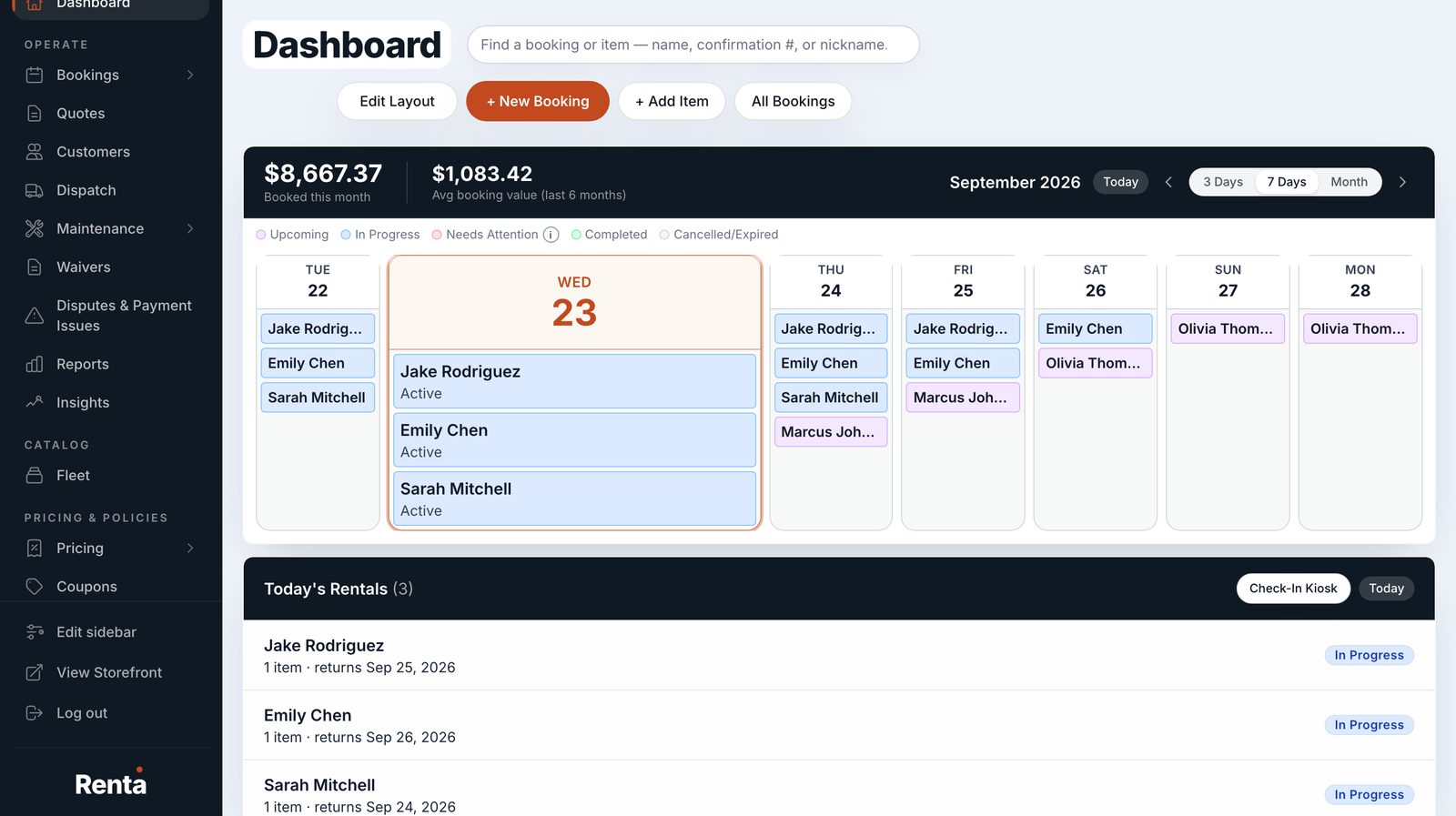
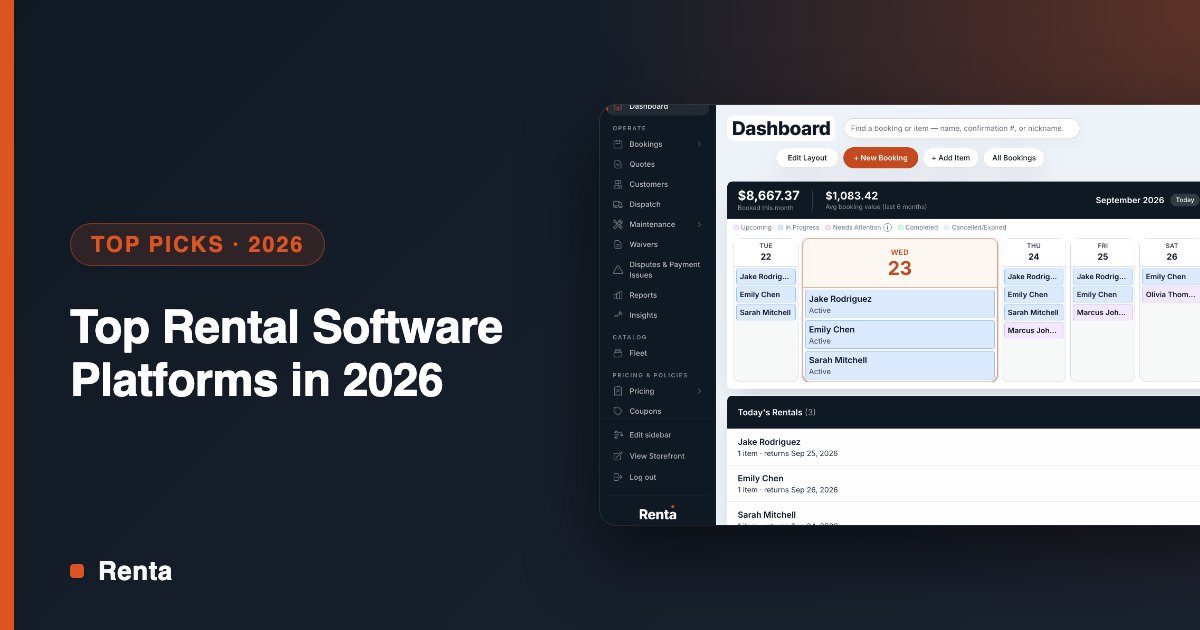
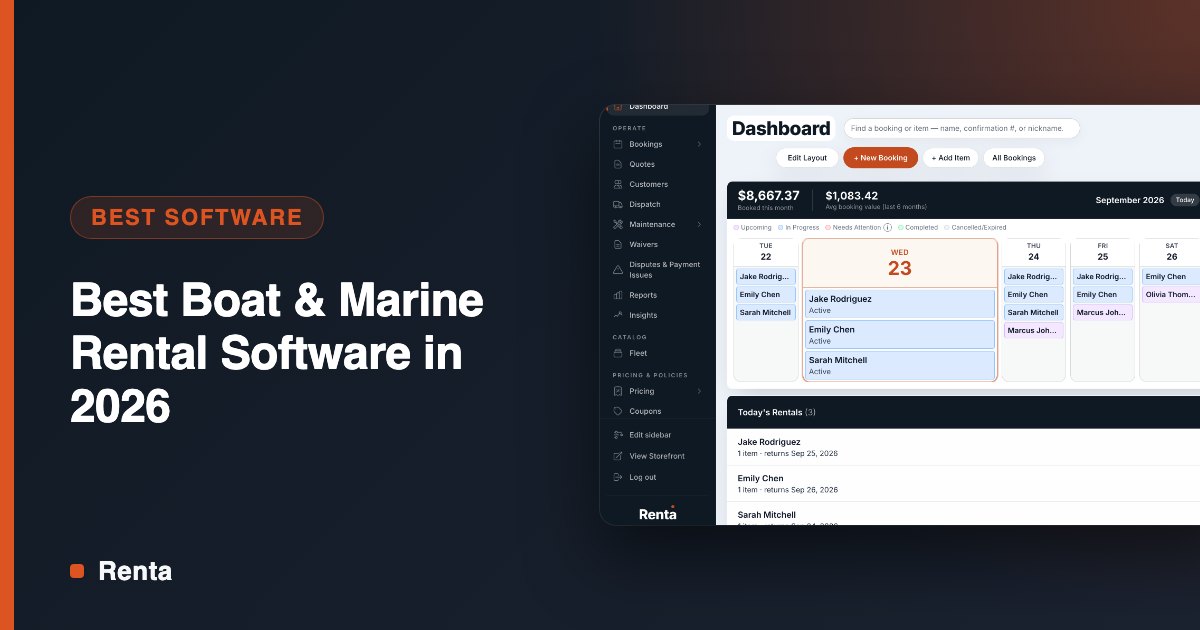
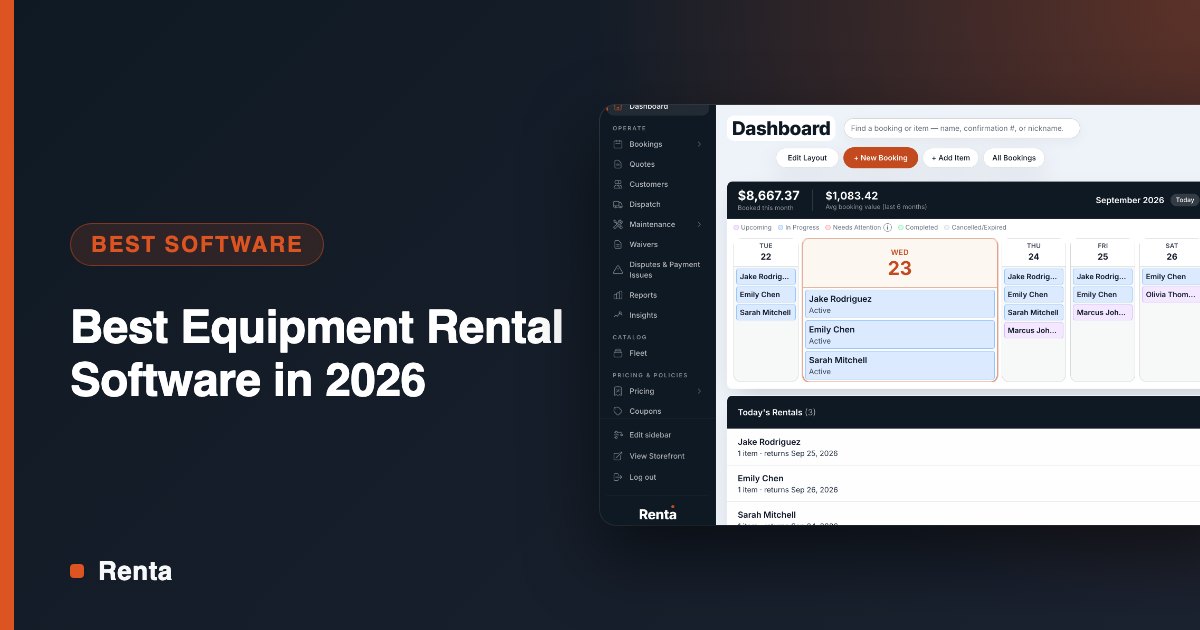
Renta's booking dashboard: a live calendar and today's rentals at a glance (demo account, sample data).
The Three Kinds of RV Rental Software
RV rental software isn't really one category — it's three, and mixing them up is how operators end up with the wrong tool. Peer-to-peer marketplaces like RVshare and Outdoorsy connect individual RV owners with renters; the platform handles booking, payment, and insurance, while the owner supplies and hands off the vehicle. They win on inventory breadth and geographic reach, which matters a lot for one-way trips, since a renter can usually find a P2P owner near a drop-off city where a corporate fleet has no location at all. Owned-fleet SaaS tools like Renta, Wheelbase, and Booqable are built for businesses that own their vehicles and want a branded booking website instead of a marketplace listing buried among thousands of others. Horizontal rental software adapted to RVs is the third, quieter category — general-purpose rental or booking platforms that could technically run an RV business but weren't built for one. Rentman and HireHop are examples: both are established rental-software products built for AV, event, and construction-equipment rental houses, and neither shows any evidence of RV-specific features, marketing, or customers. A small operator could adapt either for basic reservations and invoicing, but you'd be handling mileage overage, generator-hour logging, and damage claims by hand — so we left them out of the ranking below rather than force a fit that isn't there.
The Best RV Rental Software and Marketplaces in 2026, Ranked
Here's how the seven real platforms stack up, starting with the owned-fleet tools and moving through the marketplaces and adapted options.
1. Renta — Best for Owned-Fleet Operators Who Want Pricing Flexibility Plus Maintenance Tracking
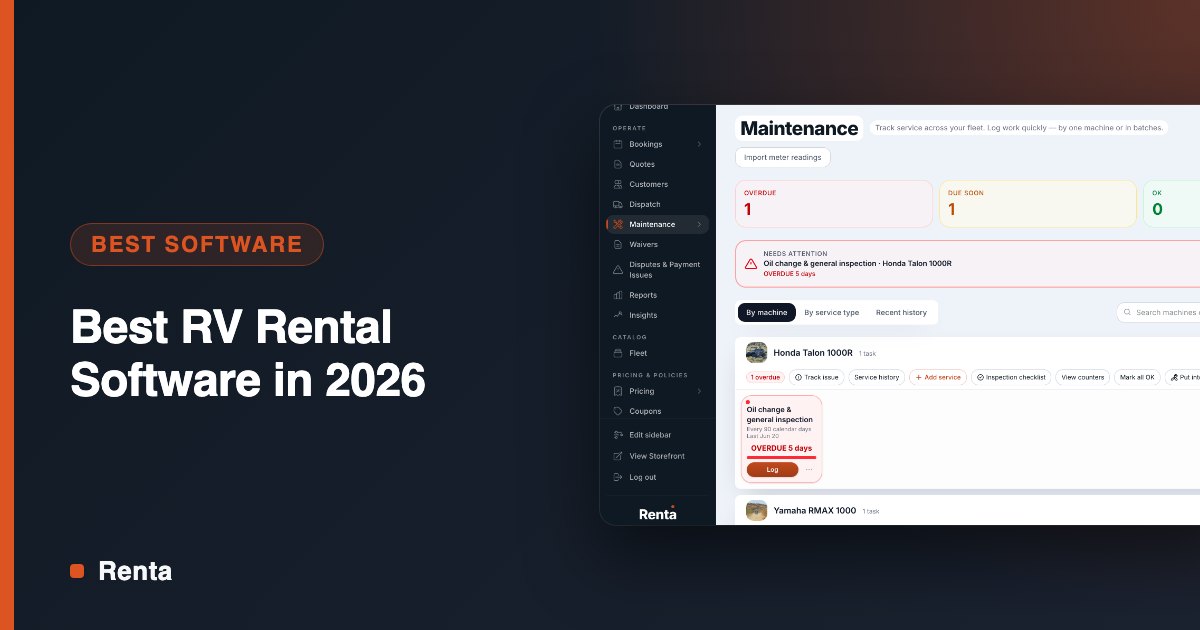
Renta is built for businesses that own their equipment and want one system for the booking site, pricing, and day-to-day fleet operations rather than stitching together a marketplace listing and a spreadsheet. The standout for RV operators specifically is the maintenance tracker: per-unit schedules tied to real usage meters — engine hours or mileage — with automatic overdue, due-soon, and on-track status, and logged service automatically resets the schedule. Pricing can run as day-rates, hourly with daily caps, half-day slots, or fixed packages, with layered rules for seasonal, multi-day, and bundle pricing, which suits the wide swing between weekend renters and week-long road-trippers that RV businesses see. The website builder means the booking site is the actual storefront, not a marketing page bolted onto a separate checkout, and Renta runs on commission-based pricing rather than a flat monthly fee to get started. The honest limitation: Renta is newer than the incumbents in this space, so it has a smaller install base and fewer third-party integrations than platforms that have been around for a decade, and while it's strong for equipment and powersports-style fleets, it's less proven yet for large, multi-department enterprise operations.
2. Wheelbase — Best for a Purpose-Built RV Fleet Manager
Wheelbase is genuinely built for RV rental companies rather than adapted from general equipment software, and it shows in the details: check-in/check-out tracking, on-demand insurance, and roadside-assistance services built into the booking and payment flow. It also syncs with the Outdoorsy marketplace, so leads from that larger listing pool can flow into your own booking system — a useful bridge if you want marketplace reach without giving up your own storefront entirely. The catch, per user reviews, is that Wheelbase monetizes past the base subscription: it reportedly charges commission on leads forwarded from Outdoorsy and upsells "Premium Services," so the effective cost for an operator using those features can run higher than the advertised entry tier suggests.
3. Booqable — Best for a Simple, Transparent Campervan Storefront
Booqable markets a dedicated Campervan and RV Rental Software page and pairs it with flat-rate pricing it advertises as unlimited inventory and orders with no commission on bookings, plus a built-in website builder so a small operator can launch a storefront without hiring a developer. That pricing clarity is a real strength, especially for a first-time software buyer nervous about hidden fees. But despite the RV-specific marketing, Booqable's publicly listed feature set shows no built-in mileage tracking, no generator-hour logging, and no insurance-document management — the operational tools an RV business uses every week — and some users report a weaker mobile app and pricing that gets inflexible once you need features above the base tier.
4. RVshare — Best for Marketplace Reach Without Running Your Own Site
RVshare is one of the biggest names in P2P RV rental, with a large listed inventory, and it has built a real reputation for responsive customer support and fast claims handling — the kind of thing that matters a lot the day something actually breaks mid-trip. For an owner who wants renters without building a brand, that reach and support reputation are genuine advantages. The trade-off is cost transparency: mandatory insurance plus a service fee can add meaningfully to a renter's total cost on top of the advertised nightly rate, and a recurring complaint theme in reviews is that those added fees aren't always clearly disclosed at the time of booking — which is a renter-trust problem that reflects on you as the listing owner too.
5. Outdoorsy — Best for Built-In Insurance on Every Booking
Outdoorsy lists a larger inventory than RVshare and bundles liability insurance and 24/7 roadside assistance into every confirmed booking rather than treating it as an optional add-on — a genuinely stronger baseline safety net for both owner and renter. The concern worth naming plainly: multiple independent comparisons describe Outdoorsy's phone and customer-support responsiveness as slower than RVshare's, particularly during claims — worth watching if you're choosing a marketplace partner based on how they'll treat your renters when something goes wrong.
6. Quipli — Best for Blended Equipment-and-RV Fleets
Quipli is horizontal equipment-rental software, not RV-specific, but its feature set — delivery coordination, maintenance tracking, storefront, payments — genuinely overlaps with what an RV fleet needs, which makes it a reasonable fit if RVs are part of a broader equipment rental business rather than the whole operation. Reviewers consistently point to transparent, upfront flat-fee pricing with no high-pressure sales process as a real strength. The downsides are practical ones: multiple reviewers describe initial inventory and pricing setup as very labor-intensive, the QuickBooks integration is limited with little setup guidance, and its flat annual per-location fee is a materially higher entry cost than the monthly SaaS tools on this list.
7. Checkfront — Best If You Already Run Tours or Campgrounds
Checkfront is built for tour operators, activity providers, and campgrounds — general "rentals" and bookings software, with no dedicated RV vertical. Its real strength is calendar sync across channels, including Airbnb and Booking.com, which prevents double-booking, and the entry plan bundles a meaningful number of annual bookings plus waivers. If you already run campground or tour bookings and want to add a few RVs to the same system, it's a legitimate option. But reviewers describe a steep learning curve on the operator side even though the customer-facing flow is simple, and there's no 24/7 support — phone support is gated behind higher-tier plans — which matters if an RV breaks down at 11pm on a Saturday.
| Platform | Best For | Standout Feature | Honest Limitation |
|---|---|---|---|
| Renta | Owned-fleet operators wanting pricing flexibility + maintenance tracking | Maintenance tracker tied to engine hours/mileage | Newer platform, smaller install base, less proven at enterprise scale |
| Wheelbase | A purpose-built RV fleet manager | Outdoorsy lead sync + built-in insurance | Commission on forwarded leads and premium upsells raise real cost |
| Booqable | A simple, transparent campervan storefront | Flat pricing, no commission, built-in website builder | No mileage tracking, generator-hour logging, or insurance-doc management |
| RVshare | Marketplace reach without running your own site | Large RV inventory, strong support/claims reputation | Fees stack and aren't always disclosed upfront |
| Outdoorsy | Built-in insurance on every booking | Liability insurance + roadside assistance bundled in | Support responsiveness reported to lag RVshare's |
| Quipli | Blended equipment-and-RV fleets | Transparent flat-fee pricing, delivery + maintenance tools | Labor-intensive setup, limited QuickBooks integration, high flat annual entry cost |
| Checkfront | Operators already running tours or campgrounds | Multi-channel calendar sync prevents double-booking | Steep operator learning curve, no 24/7 support |
What Actually Matters for an RV Fleet Before You Choose
Three operational realities separate RV rental from renting almost anything else, and they're worth checking against any shortlist before you sign up. First, mileage and generator-hour tracking is treated as a core requirement by every RV-focused platform's own marketing, yet it's explicitly missing from Booqable's publicly listed feature set and never mentioned at all for Rentman, HireHop, or Checkfront. If overage billing and usage-based maintenance matter to how you run the business — and for most RV fleets, they do — confirm the tool actually does this rather than trusting the vertical-sounding landing page. Renta's maintenance schedules tie directly to logged engine hours or mileage, with logged service automatically resetting the schedule and a maintenance-spend report to track the cost over time.
Second, damage and insurance handling is a common complaint driver on the P2P marketplaces — undisclosed insurance charges and slow claims resolution show up repeatedly in reviews of both RVshare and Outdoorsy. Owned-fleet software sidesteps that specific complaint by putting you in control of the waiver and deposit process directly: automated waiver-signature requests (single-signer or per-rider) and Stripe Connect deposit holds with dispute tracking mean the paperwork and the money are handled before the keys change hands, not negotiated after a claim.
Third, one-way and delivery logistics favor the marketplaces' geographic density — a renter dropping off in a different city is much more likely to find a P2P owner nearby than a single-location corporate fleet. But for standardized pickup-and-return business, several independent comparisons note that owned-fleet models are actually better for first-time renters specifically because the process is predictable. If delivery is part of your model anyway, a delivery dispatch board with driver assignment (built into Renta) covers the coordination without needing a marketplace's density to make it work.
See Renta in Action
Here is what the software actually looks like. Screens marked "demo account" come from Renta's demo shop with sample data, so every customer name shown is fictional.
Automated booking emails
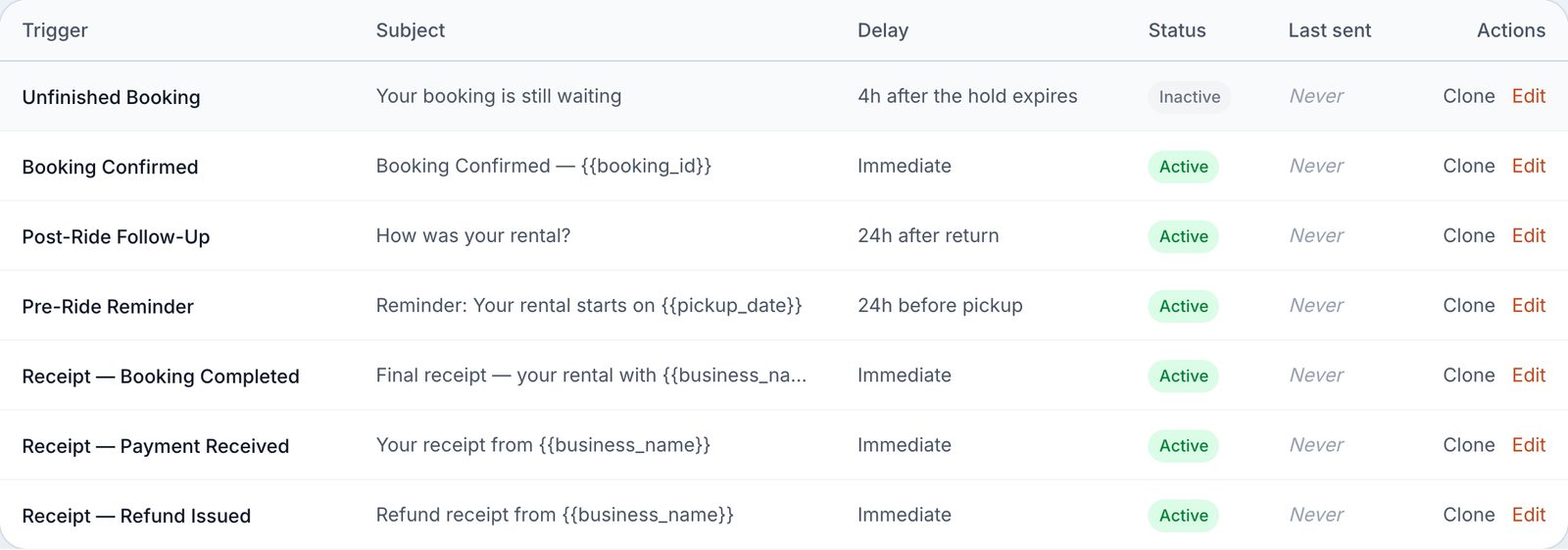
Automated emails for confirmations, reminders, receipts, and post-ride follow-ups (demo account).
Flexible pricing rules
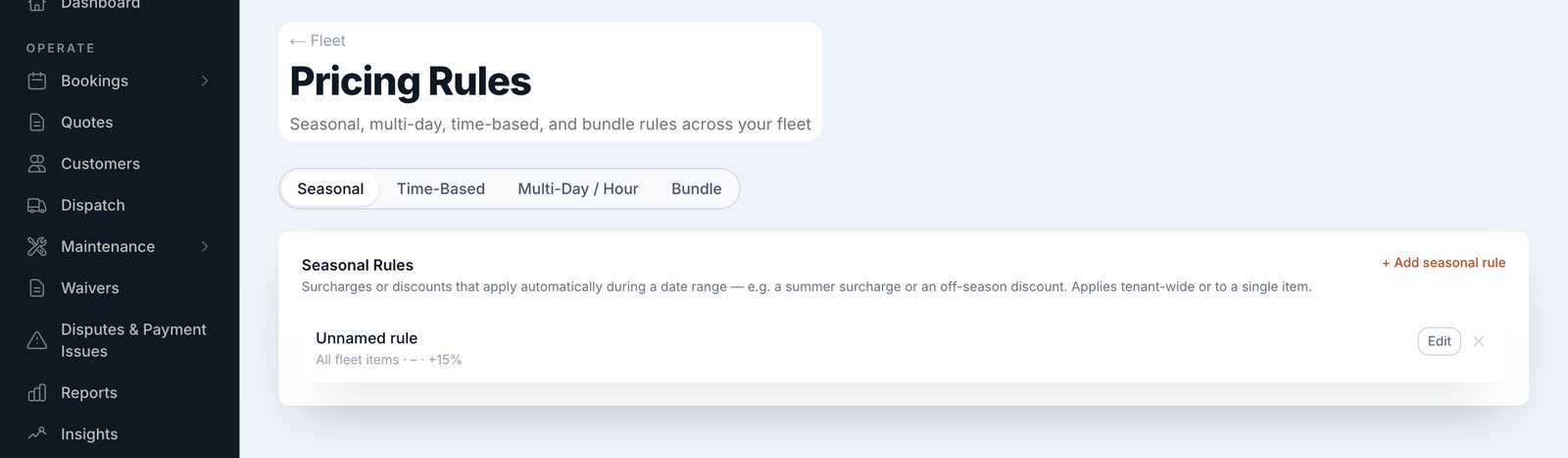
Layered pricing rules: seasonal, time-based, multi-day, and bundle (demo account, sample data).
Frequently Asked Questions
What is the best software for renting out RVs?
It depends on whether you own your fleet or list other owners' vehicles. For owned fleets, Renta, Wheelbase, and Booqable are the strongest branded-storefront options; for marketplace reach without your own site, RVshare and Outdoorsy are the established players.
Is RVshare or Outdoorsy better for RV owners?
RVshare has a stronger reputation for support responsiveness and fast claims handling, while Outdoorsy lists a larger inventory and bundles insurance and roadside assistance into every booking by default. Some independent comparisons rate Outdoorsy's support responsiveness lower than RVshare's, which is worth weighing if support quality matters most to you.
How much does RV rental software cost?
It varies widely by model: Booqable and Checkfront both publish monthly SaaS pricing on their websites, and Quipli charges a flat annual fee per location rather than a monthly rate. Renta and Wheelbase both run on commission or usage-based pricing rather than a required flat fee to get started, and the marketplaces (RVshare, Outdoorsy) take a percentage commission from owners plus a service fee from renters instead of charging software fees at all. Always confirm current pricing directly with each vendor before deciding.
Do I need special software to track RV mileage and generator hours?
If you own your fleet, yes — mileage and generator-hour overage is one of the most common billing disputes in RV rental, and most general rental software doesn't track it at all. Look specifically for maintenance scheduling tied to actual usage meters rather than a fixed calendar, since that's the feature most "RV-branded" software claims but doesn't always deliver.
Can I list on a marketplace and run my own booking software at the same time?
Yes, and it's a common setup — Wheelbase specifically syncs leads in from Outdoorsy while still running your own branded booking site. The trade-off is that marketplace leads usually carry a referral cost even when they land on your own system.
Is Renta a good fit for a small RV rental business?
Renta is a strong fit for a small-to-mid owned fleet that wants flexible pricing, usage-based maintenance tracking, and a real storefront in one system without a required flat monthly fee. It's a newer platform than some competitors, though, so if you need a large third-party integration ecosystem or you're running a large multi-department fleet, weigh that against the more established options above.
The right software here isn't about picking the biggest name — it's about matching the tool to whether you own the fleet or you're renting out access to it. If you own your RVs and want the pricing flexibility, maintenance tracking, and branded storefront to live in one place, that's exactly what Renta is built for.